


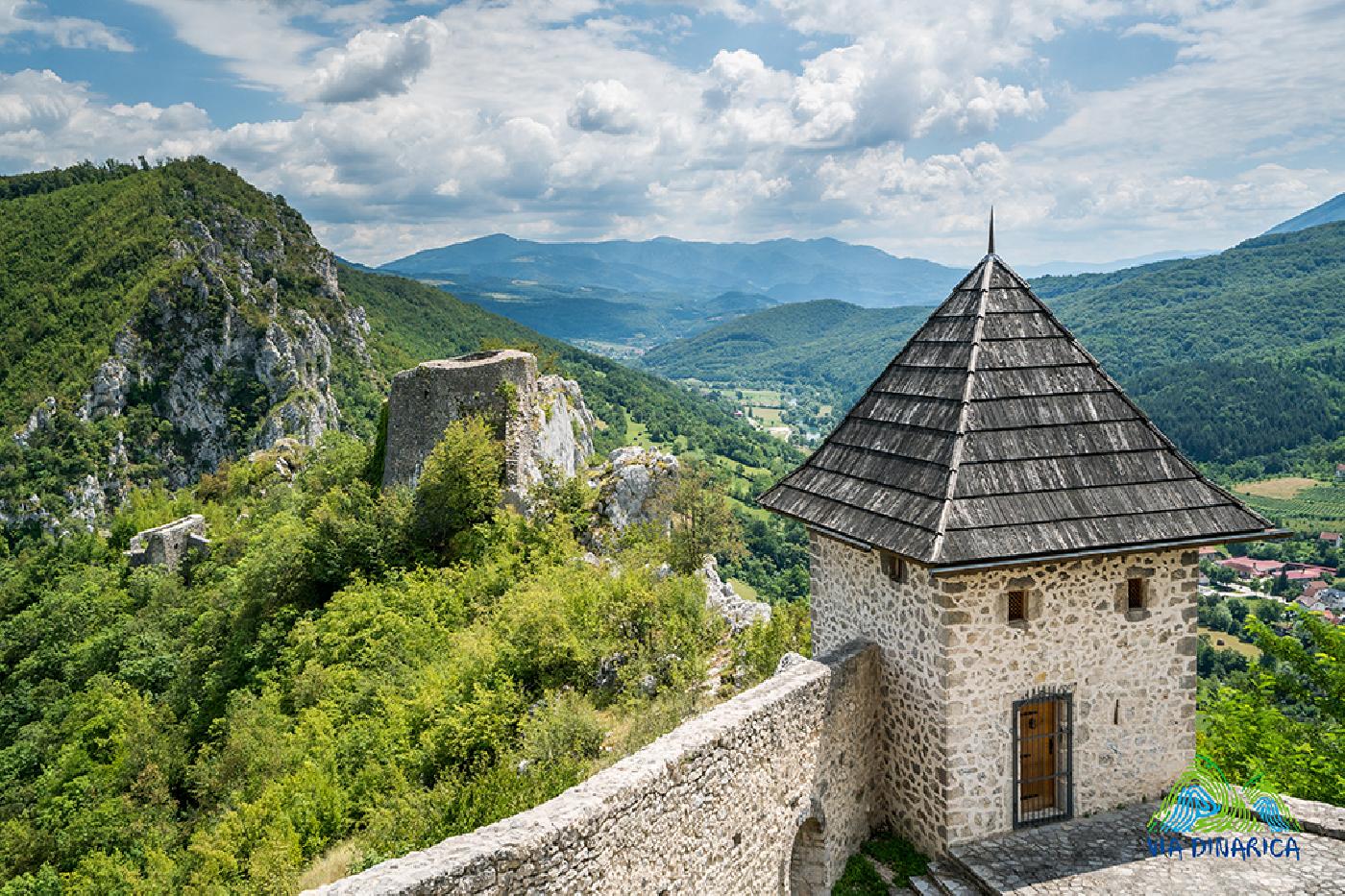
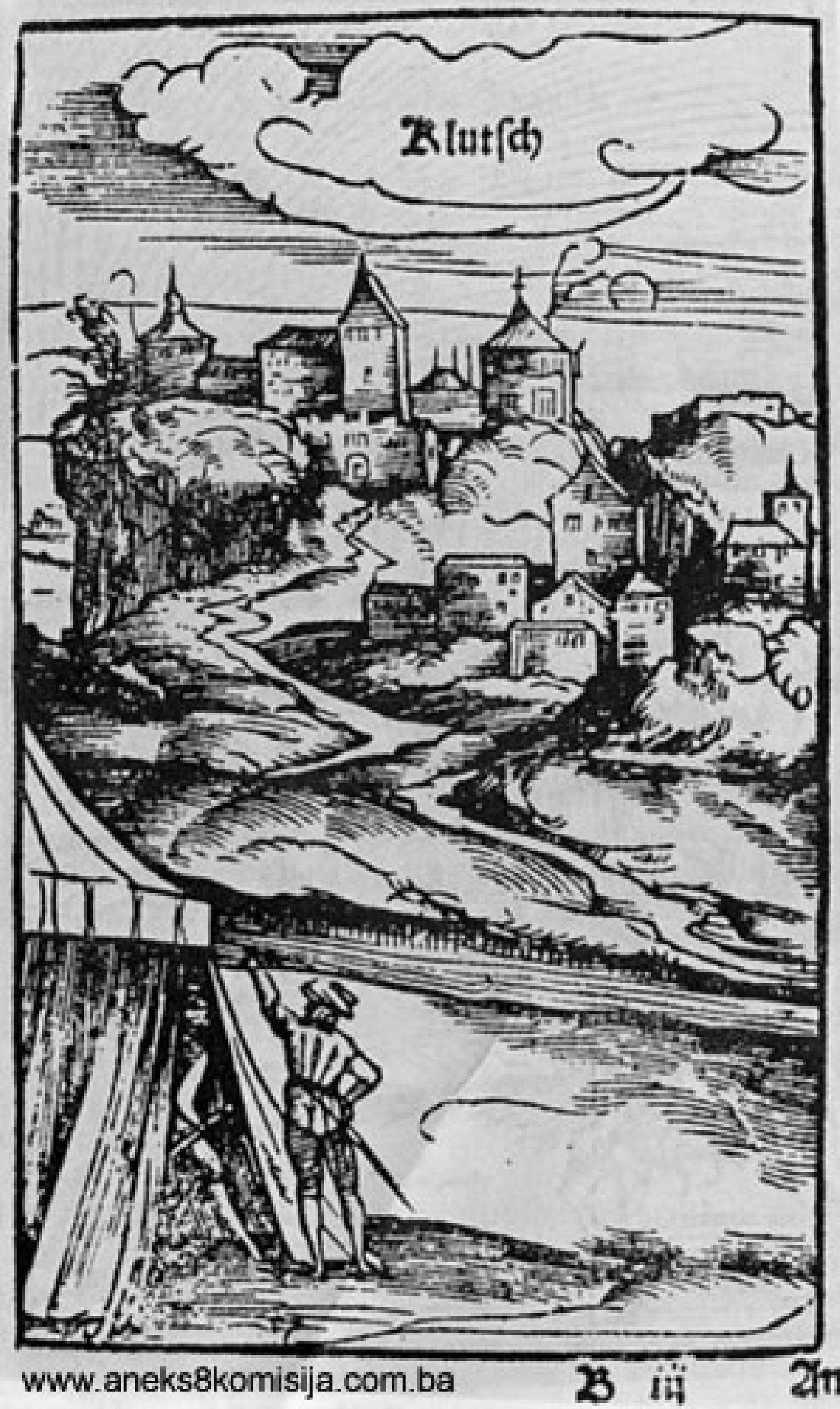
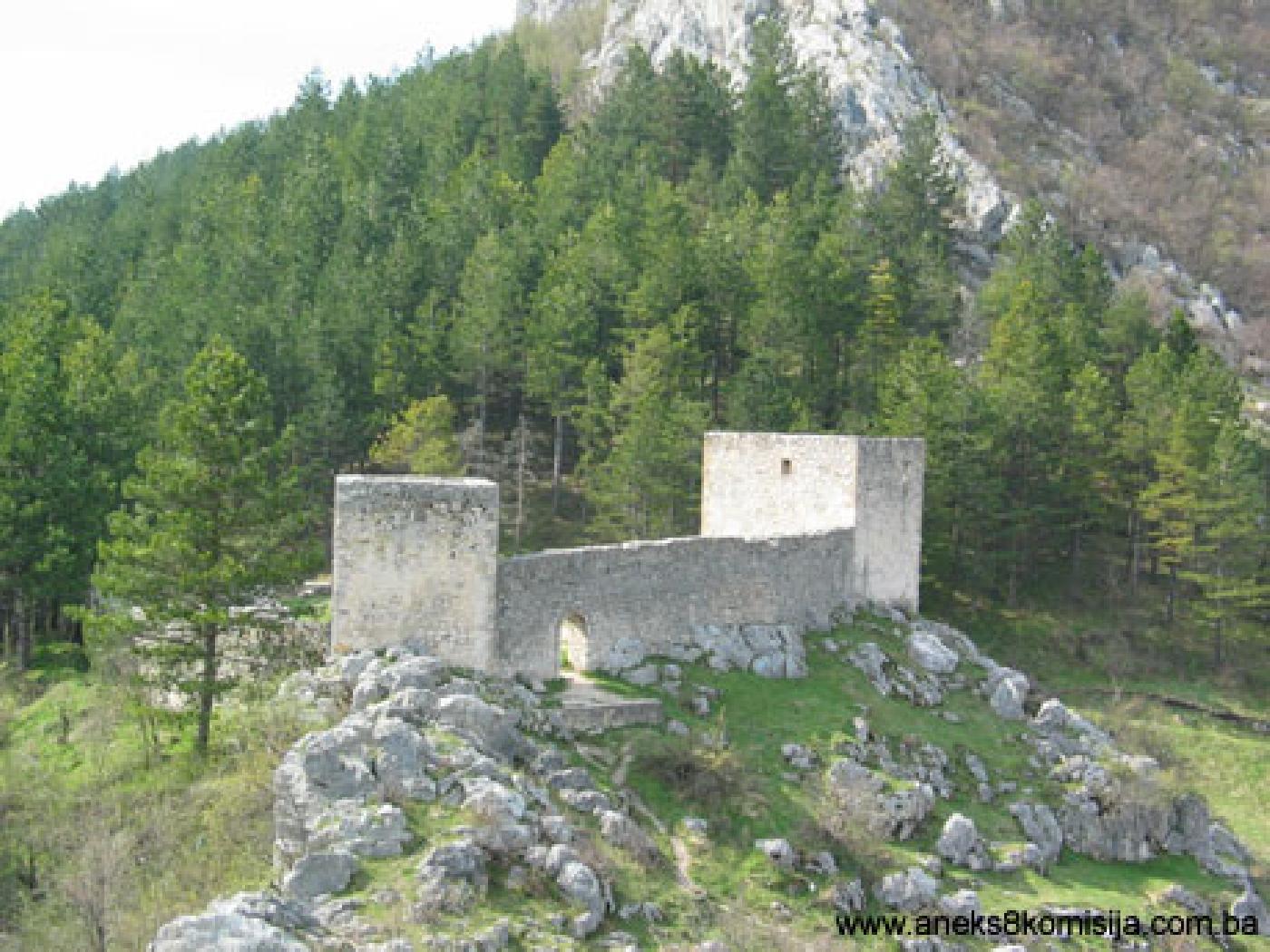
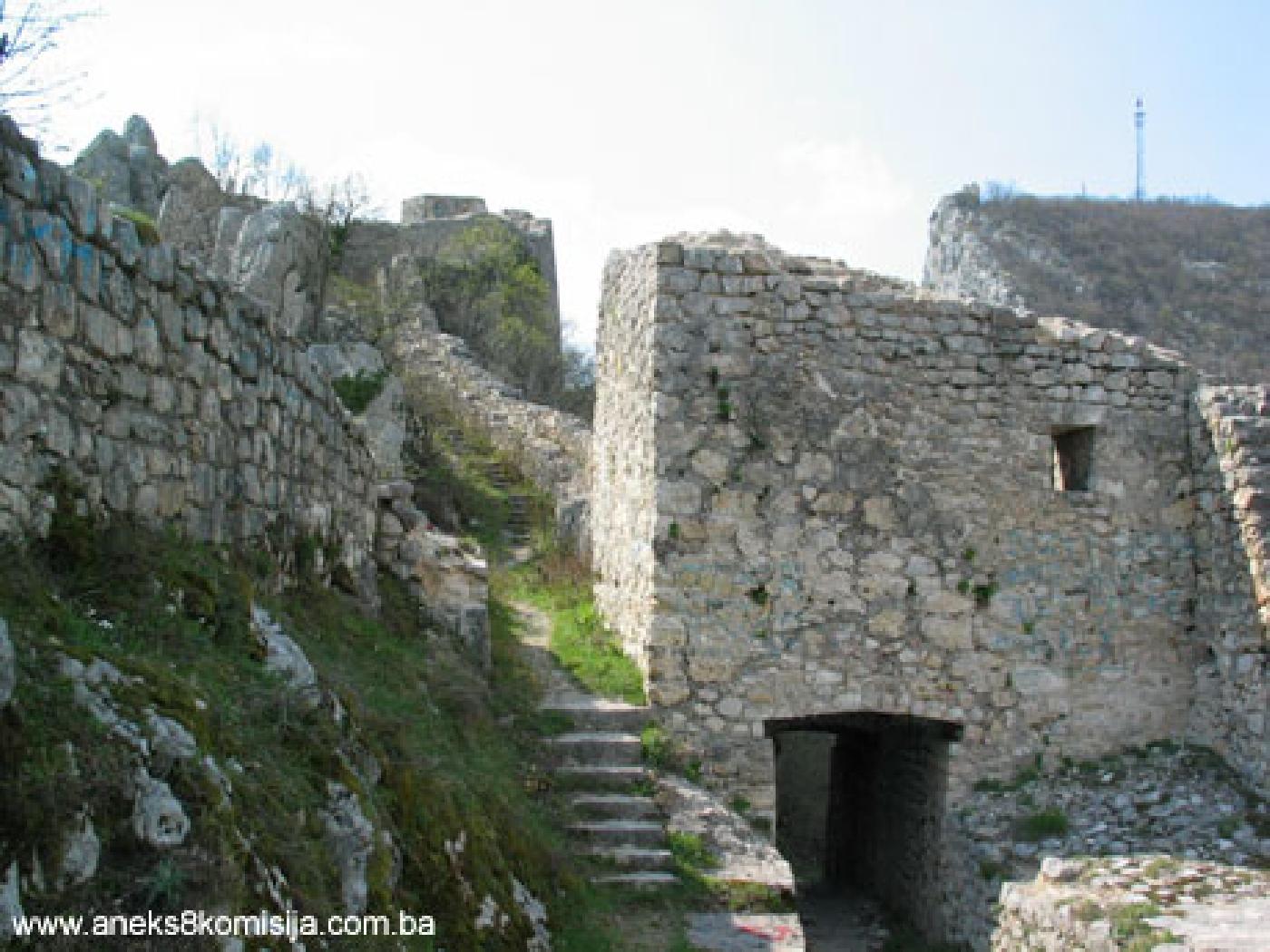
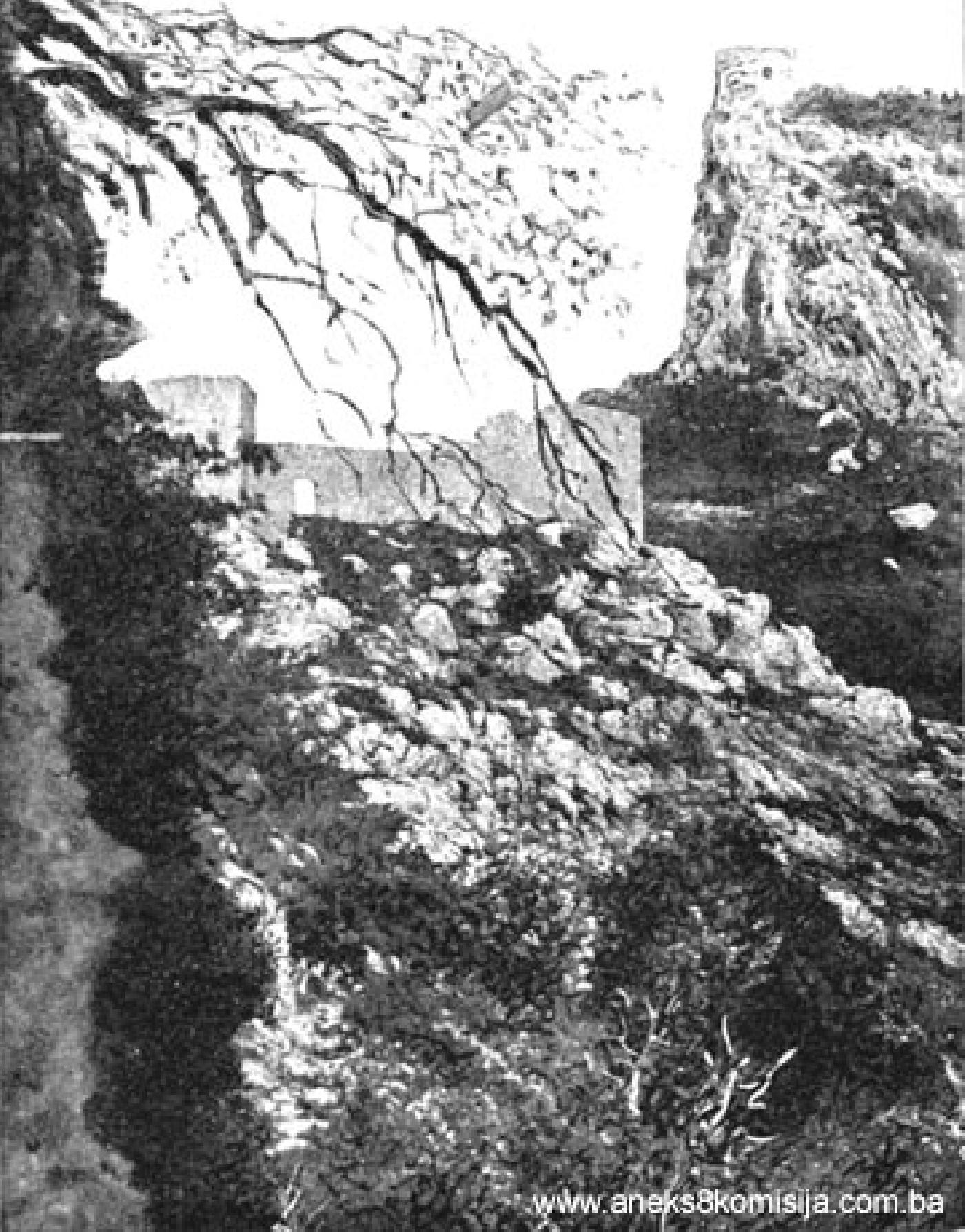
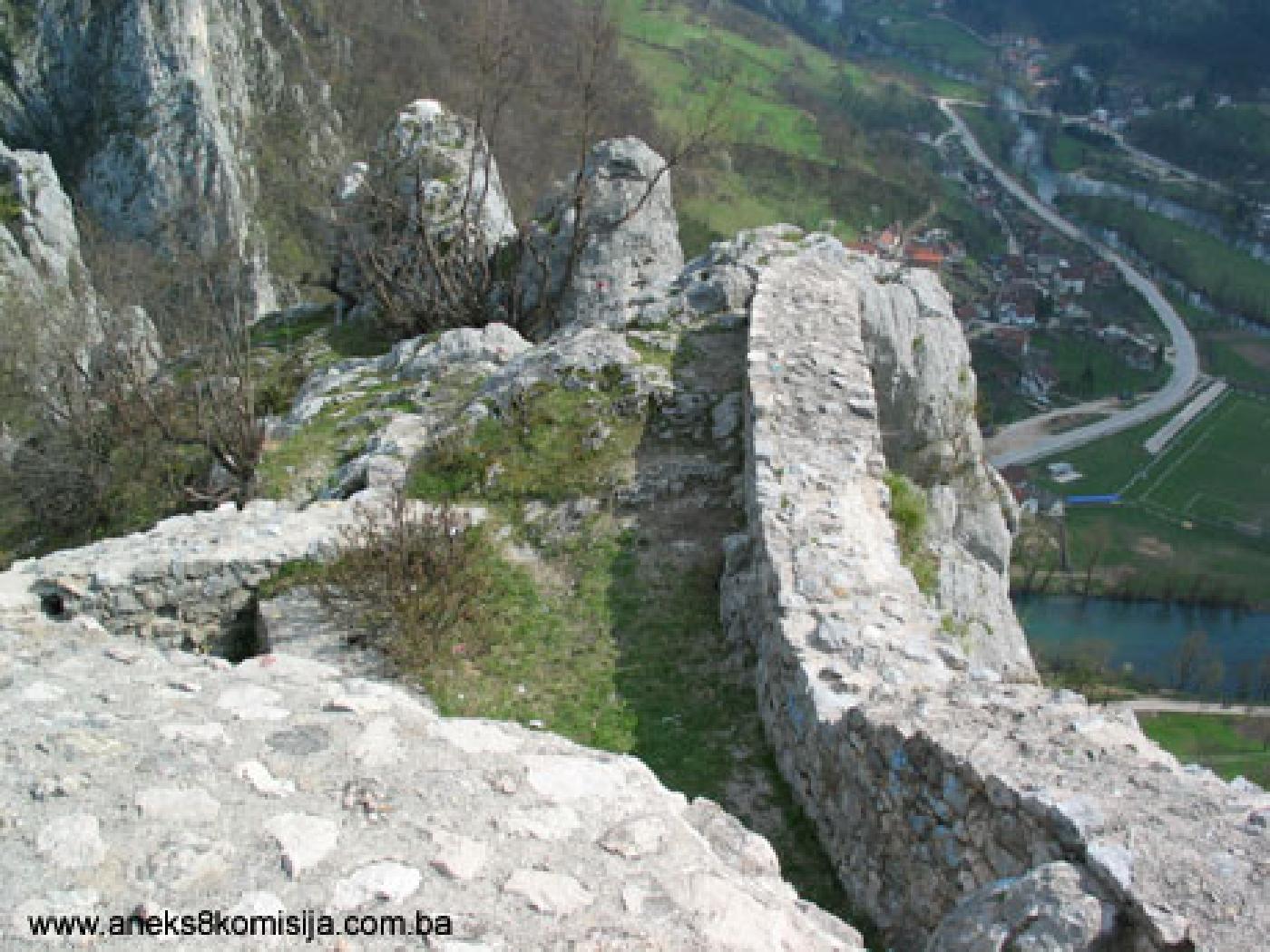


Stari grad Ključ smješten je na visokim i strmim stijenama uz lijevu obalu rijeke Sane, koje dominiraju okolinom. Nalazio se u Mrenskoj župi koja se prostirala u porječju gornje Sane oko grada Ključa i Mrena na Sani...
U izvorima se prvi put spominje 25. maja 1325. godine kao baštinski posjed Vukoslava Hrvatinića, sina Hrvatina Stjepanića… Tog dana su pred Vukoslava Hrvatinića u Ključu stupili braća Ceperna, Đuro i Budec, te ga zamolili da sinu Đure, što ga je imao s kneževoom kmeticom Maricom Hranićevom, dodijeli ličnu slobodu. Knez Vukoslav je to učinio pred svjedocima. Tridesetak godina kasnije spominje se Ključ kao baštinski posjed Vlatka Vukoslavića, najstarijeg sina Vukoslava Hrvatinića, koji je iz Ključa vladao Mrenskom Župom i titulisao se kao ključki knez. On se 1354. godine pobunio protiv odluke da bosanskoga bana Stjepana II Kotromanića naslijedi petnaestogodišnji sin njegovog brata Vladislava Tvrtko I Kotromanić. Nakon što je kneginja Jelena, koja je vladala u ime Tvrtka I Kotromanića, zatražila pomoć od ugarskog kralja Ludovika I, ključki knez Vlatko Vukoslavić je pristao na pomirenje, priznavši novoga bana i privremenu žensku regenciju. Pomirenja između ključkoga kneza, te kneginje Jelene i bana Tvrtka zvanično je proglašeno 1354. godine na saboru „vse zemle Bosne i Dolnih Kraj Zagorja i Hlmske zemle.“ U milama kod Visokog . Vlatka Vukoslavića je naslijedio sin Vukoslav Vlatković, kome, zajedno s ocem. Tvrtko I sa svojim bratom Vukom i majkom Jelenom 1357. godine obnavlja zakletvu iz 1354. godine pred mnoštvom vlastele. Tom prilikom se prvi put spominje knez Vukac Hrvatinić, otac Hrvoja Vukčića Hrvatinića…
Ključki grad se sastoji iz tri dijela: grada s podgrađem, tabora isturene kule Ljubice. Svi objekti u gradu bili su opasani visokim bedemima sa sjevera, dok su s juga prirodno zaštićeni dubokom provalijom. Zajedno s podgrađem, ovi objekti predstavljaju najstarije gradsko jezgro, uklopljeno u jedinstven sistem zidina. Tabor, koji je smješten između grada i Ljubice, mlađi je kompleks, koji u sadašnjem obliku potječe iz osmanskog perioda, mada je u osnovi ostao srednjovjekovni. Isturena kula Ljubica izgrađena je u XV stoljeću i služila je kao bočna zaštita grada od neprijateljske artiljerije. Ona nadvisuje sav ostali grad. Zbog položaja odakle se pružao širok vidik bila je odlična stražara, a u slučaju potrebe služila je kao sklonište posadi i dvoru. U podnožju joj se nalaze ruševine dva grada: osmanskog i srednjevjekovnog na južnom platou.
Grad se nalazi na stjenovitom i nepristupačnom terenu, pa mu nije bila potrebna neka naročita zaštita. Samo za slučaj sigurnosti stanovnika, na mjestima iznad ponora sazidan je niski zid. Na sjevernoj strani sazidan je čvrst bedem s nizom puškarnica. Na zapadnoj strani sazidan je čvrst visoki bedem s nizom puškarnica. Na zapadnoj strani spajao se sa stijenom na kojoj se dizala masivna višeugaona kula (gradski doksati), jaka za odbranu. Ispod nje, odmah uz bedeme, prolazi uzak put čija se druga strana spušta niz strminu brijega. Negdje oko sredine bedema završava se put čvrstom kapi-kulom s ulazom u grad. Ispred nje je prilično prostrano predvorje. Kapi-kula, kao i većina građevina te vrste, je čvrsta, ali u Ključu, za razliku od drugih, ima špicast a ne ravan čeoni zid, da bi se kamenje iz opsadnih sprava i topovska đulad odbijala i što manje oštetila kulu. Jad se prođe niska kapija i stupi u grad, u njegovom istočnom dijelu nalaze se temelji palate do koje je vodio široki trijem. Iza nje se nalazio vrt ograđen bedemom. Uz palatu je prislonjen, prateći konfiguraciju terena, izlomljeni zid. Obor grada koji zatvara taj zid, idući prema zapadu naglo se sužava i najuži je na mjestu gdje se zid najviše približava kapi-kula, čineći na taj način uski prolaz u zapadni dio grada. Ovaj prostor je namjerno sužen. U slučaju da neprijatelj osvoji istočni dio grada, posada se mogla povući u zapadni dio grada, a prolaz zazidati. Odmah uz palatu bio je skriveni tajni izlaz.
Ključ je mjesto gdje je okončana 1463. godine bosanska samostalnost zarobljavanjem i kasnije pogubljenjem posljednjeg bosanskog kralja Stjepana Tomaševića, u Ključu su zarobljeni i njegov polubar i polusestra Sigismund i Katarina. Život im je pošteđen zato što su bili sasvim maloljetna djeca. Njihova majka, kraljica Katarina je 26. oktobra 1463. godine ostavila u depozit jedan mač kralja Tomaša ukrašen srebrom, u namjeri da ga Dubrovčani sačuvaju i predaju Sigismundu, ukrašen srebrom, u namjeri da ga Dubrovčani sačuvaju i predaju Sigismundu, njenom sinu, ako se ikada oslobodi osmanskog ropstva. Međutim, Sigismund je u međuvremenu prešao na islam dobio ime Isak i postao sandžakbeg Karasi u Maloj Aziji. Nekoliko dana prije smrti, Katarina je u Rimu odredila da se mač bosanskog kralja Tomaša, ukoliko se njen sin ne vrati u hrišćansku vjeru, preda Balši, sinu njenog brata Vladislava Kosače,a pravo na bosansko kraljevstvo Katoličkoj crkvi.
U vrijeme osmanske vladavine Ključ je bio sjedište Ključke nahije i kasnije kapetanije, koja je obuhvatala dva kadiluka Kliškog sandžaka, i to Ključ i Jezero, s gradovima Ključ, Kamičak i Jezero. Na početku XVIII stoljeća ključka tvrđava je imala posadu od 140 vojnika koji su pripadali redu tobdžij, azebana i farisa. Pred austrijsko – osmanski rat (1737-39) ključka posada je povećana na 200, ljudi a tvrđava s 3 veća i 4 manja topa.
The old town Kljuc is placed on the high and steep rocks which dominate in its surrounding, on the left bank of Sana River. It existed as a part of „Mrenska Zupa“ (Mrenas parish) which spread through the whole area of the upper stream of the Sana river, over the city Kljuc and Mrena in Sana. In the historical sources it is first time mentioned on the May 25, 1325. as a property of the Vukoslav Hrvatinic, son of Hrvatin Stjepanic… On that very da yin Kljuc came brothers Ceperina (Djuro and Budec to ask from Vukoslav Hrvatinic for personal freedom of Djuro. DJuro was Vukoslavs son, from Vukoslavs relationship with his slave Marica Hranic. The duke Vukoslav has approved that wish before witnesses. Thirty years later, the old town Kljuc is mentioned as a property of the Vlatko Vukoslavic, the oldest son of Vukoslav Hrvatinic who ruled sitting in Kljuc with the whole parish of Mrena and had a title „duke of Kljuc“. The duke has rebelled, in the year of 1354. against the whish of Bosnian „ban“ (ruler) Stjepan II Kotromanic,, who wanted the 15 year old son of his brother Tvrtko I Kotromanic to inherit the throne. Then, after princess Jelena, who at that time ruled the whole country in the name of Tvrtko I Kotromanic, asked for help from Hungarian king Ludovik I, the duke of Kljuc has accepted the decree of Stjepan Tomasevic, by which he has recognized the new ban and temporarily womens regimen. Reconciliation of Kljucs duke, by princess Jelena and the ban Tvrtko was officially declared in the year 1354 on the meeting „V se zemle Bosne i Dolnih Kaj i Zagorja i Hlmske zemle“, which took place in Mila near Visoko. The throne of Vlatko Vukoslavic has inherited his son Vukoslav Vlatkovic, who, together with his father had to renew the oath in the year of 1357. in front of many witnesses, by the order of Tvrtko I, his brother Vuk and his mother Jelena. This is the occasion where, the duke Vukac Hrvatinic, the father of Hrvoje Vukcic Hrvatinic has been mentioned for the first time.
The old town Kljuc is divided on three parts: town, lower-town and a camp of emphasized tower Ljubica. All buildings are surrounded with bulwarks from the north side, while from the south side they are protected with the deep abysm. Together with the lower parto f town, these objects represent oldest heart of the town, fitted nicely into unique system of ramparts. The very camp, which is place din between fortress and tower Ljubica is the younger part of this complex. This parto f the old town, in its present form, dates from Ottoman Empire, although in its disposition it remains medieval. The emphasized tower Ljubica is built in the XV c and it was used for a side protection from enemys artillery.
The tower is the highest place oon the fortress. Its position provided the clear view of the surrounding area, what made it a good guarding spot. In case of need it was used as escape way for crew and noblemen. Underneath of tower are ruins of two cities: Ottomans and medieval one on the south plateau. The city is placed on the rocky and inaccessible terrain. So it needed no special protection. Only for the protection of inhabitants, on the spots above abysm the lower wall was built. On its west side, it connected with the rock where the massive poly-edged tower was placed, which was strong for defense. Beneath this tower, right next to the city-walls, the narrow road comes through, with its other side going down the hill almost vertically. Somewhere, in between the city-walls, ends this road with strong gate-tower, which at the same time represents entrence into the city. In front o fit, a pretty large antechamber was placed. The gate tower,like most of the buildings of this type, was firmly built. In Kljuc, this tower, unlike the other towers, has an edgy, non flat head-wall, for the purpose to defense from enemy arillery. When we pass the lower gate, and the enter the city, the foundations of the palace to which lead a wide porch, can be found on its eastern part. Behind the palace was garden enclosed with ramparts. Next to the palace, following the configuration of the terrain, a curved wall was built. The part of city, which is closed by this curved wall, narrowing, it makes a narrow passage into the west part of the city. This space is writtingly made narrow. In case the that enemy takes over the east part of the city, the crew could have got away into the west parto f the city, and easily wall up the passage. Next to the palace a secret escape was made.
Kljuc is a placee where in the year off 1463. Bosnian independence has ended, by captivating, and later by killing the last Bosnian king Stjepan Tomasevic. Together with Stjepan Tomasevic, with an intention to save it and give it back to her son Sigismuund after he comes back from the Ottomans slavery. But in the meanwhile, Sigismund has accepted an Islam for his religion, took a name Isak and went to Asia Minor (Anatolia) to be a sanjak-beg (a governor of region ) of Karasi. A few days before her death, in Rome, Katarina has decided that the sword should be given to Balsa, son of her brother Vladislav Kosaca, and the right to rulet he Bosnian country to the Catholic Church.
During the Ottomans, Kljuc was the headquarter of the Kljucs region, and the later the center of Kljuc Captaincy which included two qadi districts of Klis Sanjak: Kljuc and Jezero with towns Kljuc, Kamicak and Jezero. In the beginning of the 18th century the fortress of Kljuc had a crew of 140 soldiers that belonged to branches of gunmen, azebans and farises. Just before Austrian-Turkish War (1737-1739) the crew of Kljuc increased to 200 men, and the fortress had 3 bigger and smaller cannons.
Tekst i Slike obradio: Igor Pečenković, dipl.ecc.hot.
Izvori: Stari gradovi Unsko-sanskog kantona, http://old.kons.gov.ba/